Strategy
Swag, Swagger, and Social Media: The Glow-Up of American Political Campaign Marketing & Communications
Nikki Trufant-Wade
|
In its nearly 250-year existence, the United States of America has seen quite a bit of political evolution, but none more than in the last 65 years. At its very core, democracy is vested in the people and relies on those people to participate in it. How many, how much, and how well those people participate fuels how well the system works for all members of the society, and that starts with information.
Before the advent of mass communication, information wasn’t as readily available, making it harder for people who didn’t have in-person access to candidates, government officials, or newspapers to stay informed about candidates and policies. Then the 20th Century rolled around, and the game changed. What came next has had profound impacts on the country, government, and how We The People participate in our democracy today - both for good and not so good.
“On the radio, whoa-oh-oh…” - Donna Summer
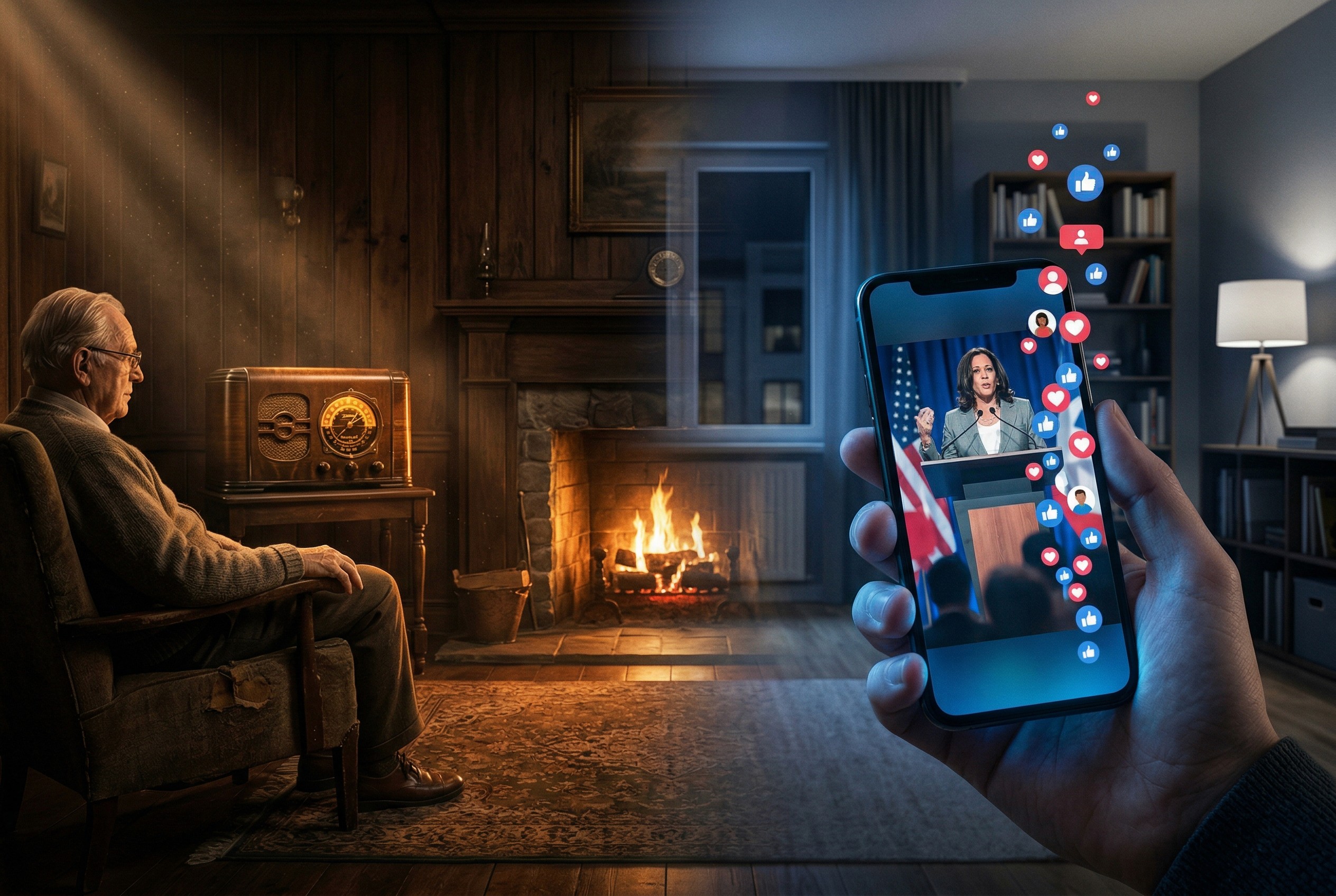
Before there were podcasts and satellite radio, there was the OG: analog radio. President Franklin D. Roosevelt was the first to use it as a tool to move the political masses. Between 1933 and 1944, FDR leveraged what has become known as “Fireside Chats” to communicate with Americans in a less formal way about important issues impacting their lives. One of the most notable Fireside Chats of his presidency was one where he discussed how the war was progressing and addressed the cost-of-living crisis Americans were facing at the time.
The conversational tone and carefully worded scripts of these fireside chats introduced the world to a less buttoned-up way of communicating in politics. Gone were the days of relying solely on time-consuming face-to-face meetings that always limit how many people get direct interaction with the principal, and on newspaper publications for the most reach.
“Primetime, never hit these heights. I mean it’s like, it’s like our first 1st class flight.” - Jay-Z
The 1950’s kicked off the Television Age and offered everyday people a window into worlds they didn’t know existed. The storytelling opportunities radio offered were now given a boost by television’s visuals, and the combination of the two was a game-changer for campaigning.
While televised debates are now a given and pearls are clutched when today’s candidates decline participating in them, they weren’t a thing until the 1960 presidential election. The Kennedy-Nixon debate was the first to be televised and proved just how important optics are to public perception and setting the narrative. 70 million Americans tuned into the September live broadcast, giving the candidates reach and voters access to them that had been unheard of up to that point. No longer was what a candidate said all that mattered. Now, how they looked when they said it and how they said it impacted the opinions voters formed about them. Pre-debate, the more senior Richard Nixon was favored to win, but John F. Kennedy’s vibrance and youth on display in America’s living rooms gave him the boost that propelled him into the Oval Office.
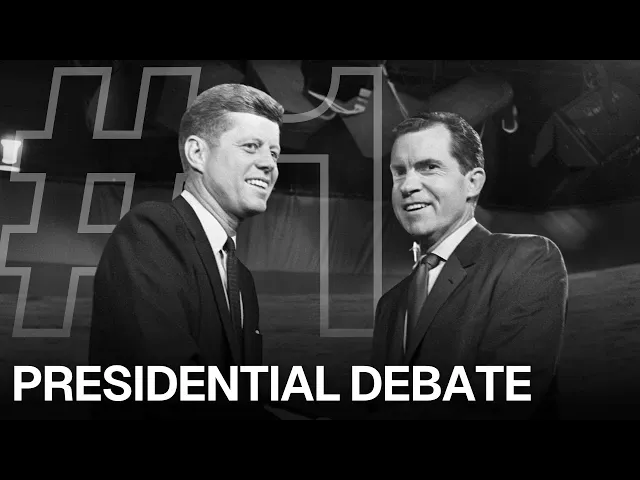
While the first debate is what many focus on when discussing the 1960 presidential election, it wasn’t the only thing that helped to shape the way we went about campaigning. It also marked the beginning of negative campaign ads when the Kennedy campaign used an Eisenhower clip to stick it to his opponent.
“Did they really get pinned? …Goin’ steady…I was hopin they would…Goin’ steady…Goin’ steady for good!” - Cast of Bye Bye Birdie
From simple baseball caps to the more elaborate, including designer exclusive scarves, are you really running for public office if you're not offering some sort of campaign swag? While it’s common for today’s campaigns to set up e-commerce pages that offer a variety of merchandise to meet any supporter’s desire, none of it would exist without the OG of the political swag game: the campaign button/pin.
In 1896, William McKinley’s campaign designed portrait buttons and pins to spread the word about his candidacy for the executive office. Originally called “portrait buttons,” they featured a photo of McKinley and messaging about his economic policies.
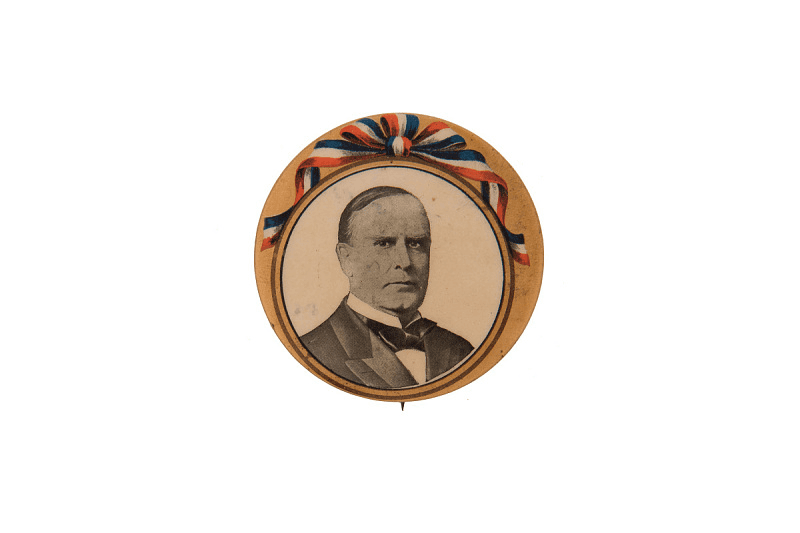
These portrait buttons allowed the campaign to put a face to the name of the candidate and inform voters about policy positions without speeches. By placing a button on a constituent, it allowed the candidate to be in many places at one time and played a role in McKinley’s victory at the ballot box. Today, candidates still continue to incorporate campaign buttons into their outreach strategies and have spawned communities of campaign memorabilia collectors.
“Hey yo…Dizzy Gillespie plays a sax…Me myself I love to max…” - Nice & Smooth
As noted earlier, television became a powerful tool for political communication in the 1950s and 1960s, but the landscape had changed drastically once the 1990s rolled around. While the Big Three networks remained powerhouses, America was firmly in the cable news era and embedded in the 24-hour news cycle thanks to CNN and its competitors. Generation Jones and many of their younger Generation X siblings had grown into young adulthood and were gravitating towards television programs they found cool, and few people were cooler in 1992 than Arsenio Hall.
That year, Bill Clinton was running for the White House following 3 consecutive Republican administrations. Wanting to meet young people where they were, he made a guest appearance on the hottest show on late-night television.
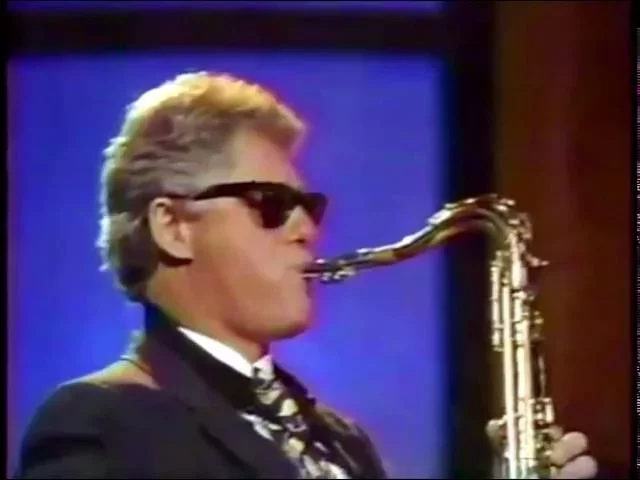
Like Kennedy nearly 30 years earlier, Bill Clinton’s Arsenio Hall Show appearance allowed America to see him as he was: young, vibrant, smart, and cool AF. He became someone many voters could identify with from a policy standpoint, but who they could also see themselves hanging out with. The appearance is credited by many as assisting him in securing the youth and urban vote, locking in a win during the general election. All of these years later, making the late-night rounds is a must for presidential candidates as well as statewide candidates with national audiences.
“My president is Black…my Lambo’s blue…And I be gotdang if my rims ain’t too…” - Jeezy
Bill Clinton’s second presidential campaign was the first to leverage Al Gore’s internet to reach the masses; Barack Obama’s was the first to use Beyoncé’s internet. During his first presidential campaign in 2008, the internet and social media were in overdrive. Facebook, MySpace, YouTube, and Twitter were some of the most used platforms, especially for younger voters and the Obama campaign was smart enough to develop a strategy that included them as well as the traditional.
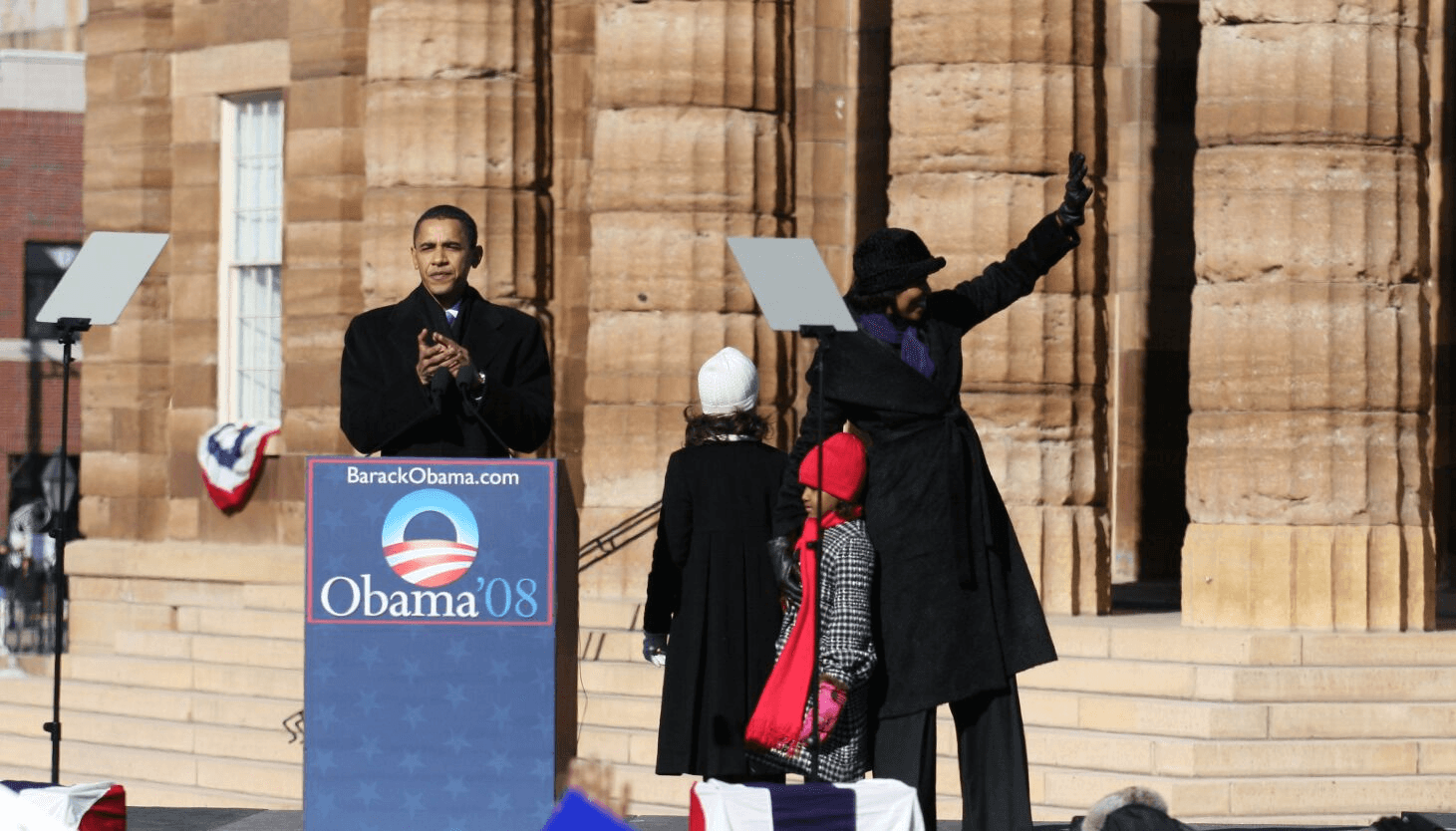
For information, social media allowed the campaign to disseminate information from the candidate’s branded accounts, but also allowed them to be shared by other users, increasing reach. These platforms also allowed the campaign to implement targeted campaigns, reaching specific audiences for pennies on the dollar compared with traditional media. Social media allowed Obama to be accessible to voters, even more so than television and radio had allowed his predecessors to be. Instead of relying on newspapers and television networks, social media allowed the campaign to respond almost instantaneously as the race evolved.
Another powerful way the Obama campaign leveraged social media: fundraising and recruitment. Every organizer worth his or her salt will tell you that elections are won on the ground. Being an organizer himself, Obama understood this very well and utilized social media to recruit an army of volunteers for his campaign’s ground game. Additionally, these platforms allowed small donors to help fund his campaign, setting a standard that has since been followed by other candidates on both sides of the aisle.
As America enters its next 250 years and embarks on a new campaign cycle, it will be interesting to see how campaign communications evolve. How much is carried from her past, and which new approaches take center stage, will be impacted greatly by technology and the country’s ever-changing demographics.